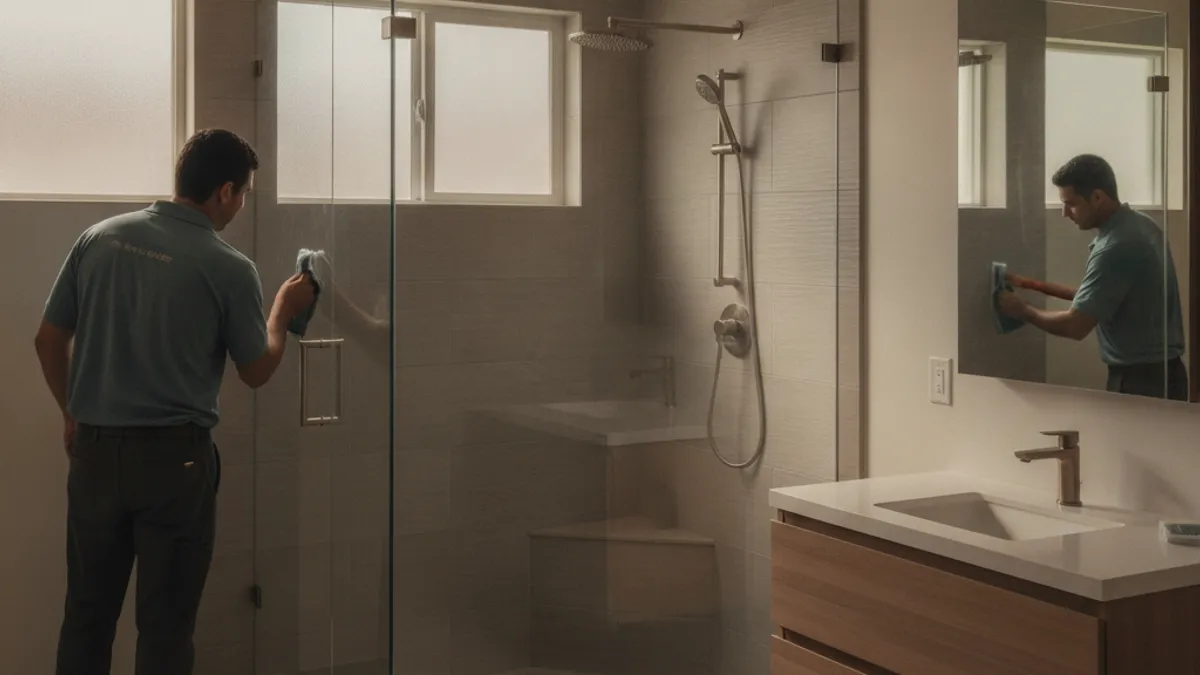
Why tub-to-shower conversions are the most common San Diego bath project
Most 1960s-1990s San Diego tract homes were built with an alcove tub on the wet wall and a separate showerhead on a riser pipe. Half the homeowners using that bath in 2026 never take a bath. The tub is a tripping hazard, a kid’s bath, a dog wash, and 60 inches of wall that could be a walk-in shower. A tub-to-shower conversion is the most common bath project independent remodelers describe across the county, from 1972 Mira Mesa ranches to 1988 Scripps Ranch two-stories to 1994 Rancho Bernardo single-stories.
A clean conversion solves four problems: it removes the stepping-over tub wall for aging-in-place, it opens the bathroom by 8-15 square feet of usable floor, it gives a true walk-in shower with a low or zero threshold, and it does it for a fraction of the cost of a full bathroom gut. The work is the same trades (demo, plumbing, tile, glass, paint) but a smaller scope. Bath Pro SD does not publish a conversion rate. The independent remodeler prices this wet zone after measuring drain location, pan type, tile, and glass.
This is a walk through what a conversion actually involves, what stays and what goes, and what to ask the remodeler before signing.
What stays and what goes in a conversion
What stays: the wet wall framing (usually), the existing shutoff valves, the toilet, the vanity, the mirror, the exhaust fan, most of the electrical, and the bathroom door. About 70% of the bathroom is untouched in a typical conversion.
What goes: the alcove tub, the tile surround on the wet wall, the glass shower door or curtain rod, the waste-and-overflow drain, and the tub spout. The tub filler valve either gets replaced with a shower-only valve or stays capped if the homeowner wants the option to add a tub filler back later.
What sometimes changes: the drain location. If the new shower is a curbless walk-in with a linear drain at the back wall, the original tub drain at the front of the wet zone has to be relocated. The drain move is the most common surprise in a conversion. Ask the plumber to price it as its own line, with slab versus raised-floor access named.
The right starting point for any conversion is a visit where a plumber and a tile setter look at the existing wet zone, the framing, the drain, and the subfloor. Bath Pro SD refers; it does not run that visit as a brand consult. The tub-to-shower conversion page has the line items for a typical project, and the walk-in shower page has the shower-only line items.
The four project types, ranked
1. Like-for-like conversion: tile surround replaced, tub removed, new shower pan and glass. This is the most common and the most affordable. The wet wall framing stays, the drain stays in the same location, the shower valve is replaced, and a new pan, new tile, and a new glass enclosure go in. Ask for that scope as written lines, not a blended San Diego average.
2. Curbless conversion: pan lowered to the subfloor, linear drain at the back wall, zero-threshold entry. This is the accessibility-first conversion and the right answer for aging-in-place. The work is heavier (the subfloor has to be lowered or the floor built up to the pan), the drain has to move, and the glass usually has to be a fixed panel. That is a different quote from a like-for-like pan.
3. Expanded conversion: wet wall pushed out 18-30 inches, larger shower footprint. This is the right answer when the bathroom is large enough to give the shower more floor space. It usually means moving one or two studs, re-routing a vent stack, and retiling the entire wet wall. Price framing and venting as their own lines.
4. Conversion plus full bath refresh: new vanity, new toilet, new flooring, new lighting, new shower. This is the conversion that becomes a full bath remodel in disguise. It is the right answer when the homeowner was going to remodel the bath in the next 3-5 years anyway, and it is more efficient to do it all at once. That quote is a full remodel, not a conversion add-on.
For most households, the curbless conversion is the right answer. The low threshold is safer, the open glass makes the bath feel bigger, and the linear drain reads as a design moment. The aging in place bathroom angle is on the walk-in tub page for households that need more accessibility than a curbless shower.
The plumbing decisions that matter
Three plumbing decisions define how a conversion feels and how it lasts.
1. The valve. A pressure-balancing valve is the code-required minimum. A thermostatic valve holds temperature steadier when someone flushes a toilet or starts the dishwasher. For a conversion that may need to serve aging parents, name the valve type on the quote.
2. The drain location. A standard 60-inch alcove tub has a left or right drain at the front of the tub. A conversion that keeps the same drain location is the simpler path. A curbless conversion with a linear drain at the back wall has to move the drain 30-40 inches. Ask the plumber to price that move as its own line.
3. The showerhead height and trim. A standard 72-inch showerhead is the code minimum. Most San Diego conversions end up at 78-80 inches for the showerhead, with a hand shower on a 30-inch slide bar for shorter household members. Ask whether the slide bar is included.
The bathroom plumbing page has the rough-in and repipe line items, including drain moves and valve upgrades.
Tile and glass choices for a conversion
Tile. Most San Diego conversions retile the wet wall and the new shower floor. Porcelain wall tile in 12x24 or 16x32 inches is the standard. Porcelain mosaic floor tile in 2x2 inches follows the slope of the pan without diagonal cuts. Marble and natural stone are the wrong answer for the shower floor in a conversion, for the same reasons as a full shower remodel.
Glass. Semi-frameless sliding doors, heavy frameless enclosures, and a fixed panel with no door are different products. A curbless conversion usually wants a fixed panel. Ask for thickness, hardware, and door type on the quote.
The frameless glass shower line items are on the shower remodel page.
What belongs on the conversion quote
Ask for written lines, not a blended San Diego average: design layout, demo, rough-in and valve, drain move if needed, pan and curb, membrane, wall tile, floor tile, glass, trim, paint, and who pulls any required permit. Bath Pro SD does not set those prices.
Tile and glass usually move the budget. Name square footage and glass type.
How to read a conversion quote
Three things separate a clean conversion quote from a corner-cut one:
- Is the plumbing line a real line item with a valve specification, a drain move, and a fixture count? Or is it a single line that says “plumbing” with one number?
- Is the waterproofing method called out? Schluter Kerdi, vinyl pan liner, or “redguard and tile.” The first two are code-compliant. The third is a corner cut.
- Is the glass enclosure line showing panel thickness, hardware finish, and door type? Or is it “shower door” with one number?
If the quote lumps everything under “tub to shower” with one big number, demand a scope-of-work attachment before signing.
What to ask a conversion contractor
Three questions separate a tub-to-shower specialist from a generalist:
- Have you done conversions in pre-1990 San Diego tract homes? The framing, the cast iron drain, and the subfloor in a 1972 Mira Mesa ranch are different from a 2005 Carlsbad new-build. The right crew has seen both.
- Will you lower the subfloor for a curbless pan, or build up to a low-threshold pan? Both work; the choice depends on the floor framing and the homeowners’ preference. The honest answer depends on the home.
- What is your lead time on a custom frameless glass enclosure? A 3-6 week lead time is normal. A 1-week promise is a red flag.
A good crew will not flinch at any of these questions. For the full bath scope that often pairs with a conversion, the full bathroom remodel page has the line items.
Call (858) 400-4896. Bath Pro SD matches you with a licensed independent remodeler. That person measures the existing wet zone, checks the framing and the drain, and writes whether a like-for-like, a curbless, or an expanded conversion is the right call. You contract with that remodeler directly.