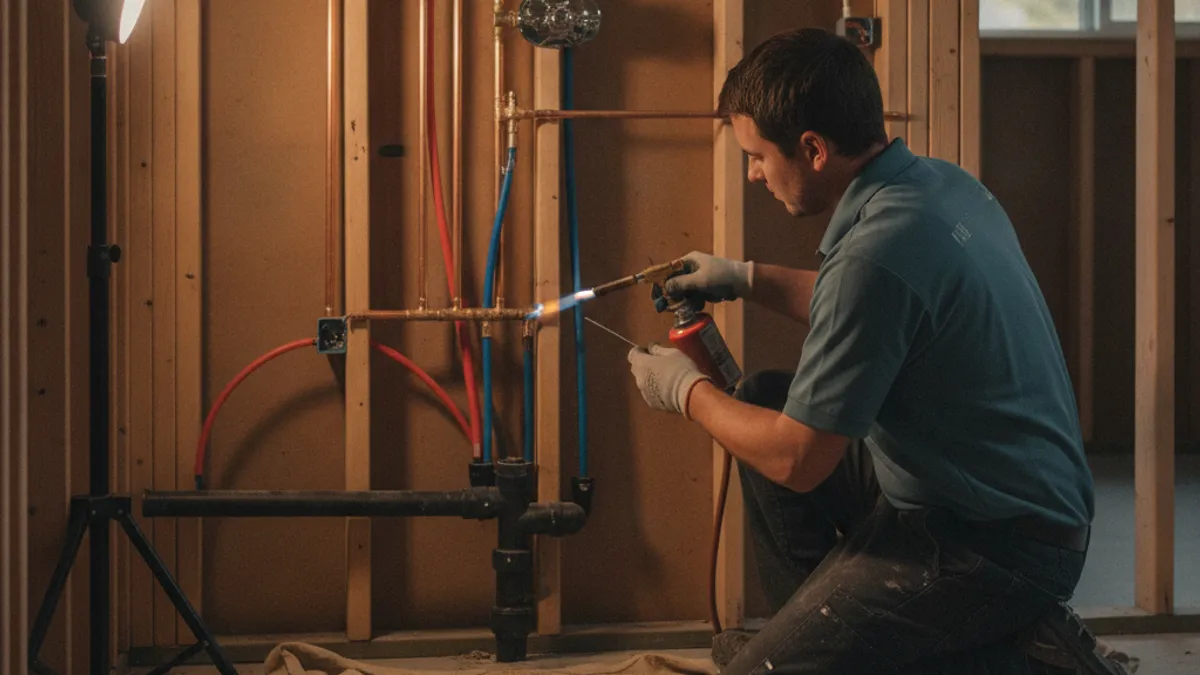
Why the plumbing rough-in is the line item most often under-scoped
A bathroom plumbing rough-in is the work the homeowner never sees, and it is the work that fails first if it is done wrong. A clean rough-in puts fixtures where they belong, sizes supply and drain lines for those fixtures, ties into the venting correctly, and is ready for rough inspection before the wall closes. Reusing corroded galvanized, capping unused drains without a plan, or skipping a pressure-balancing shower valve are the usual corner cuts. YouTube shorts can show a 20-minute demo drain. They cannot inspect your stack, your slab, or whether the City or County will pass the rough.
The independent plumber prices after opening enough of the wall to see supply material, drain material, and venting. Bath Pro SD does not publish a San Diego rough-in rate. Ask for a written scope that names what stays, what is replaced, and who calls for inspection.
The supply line decision: copper, PEX, or keep what is there
Most pre-1990 San Diego tract homes have galvanized steel supply lines. Galvanized lines corrode from the inside, the inside diameter shrinks over 30-40 years, and the corrosion shows up as low pressure at the fixtures, rust-colored water in the morning, and pinhole leaks in the wall. The right call for any bath remodel in a pre-1990 home is to replace the galvanized lines with new supply lines from the manifold (or the main) to the bath.
Three supply line materials are common in San Diego in 2026:
- PEX (cross-linked polyethylene). Common in residential remodels. Flexible, long coils, fewer fittings, and it resists scale better than aging galvanized. The plumber prices material and labor for your run lengths, not from a blog per-foot band.
- Copper (Type L). Rigid, long service life, still specified when the homeowner or the plumber wants copper. Joints and access change the labor more than the pipe type name does.
- CPVC (chlorinated polyvinyl chloride). Allowed in California plumbing work; less common than PEX in many San Diego remodels. Confirm the product and joining method in the written scope if it is proposed.
The repipe line items are on the bathroom plumbing page.
The drain and vent decision
The drain and vent system is the most code-intensive part of a bath rough-in. The rules that matter for a San Diego bath:
- Drain sizing. A shower drain is 2 inches. A tub drain is 1.5 inches. A vanity drain is 1.5 inches. A toilet drain is 3 or 4 inches. The main soil stack is 4 inches. All drains must slope at 1/4 inch per foot toward the stack.
- Vent sizing. A vent must rise vertically from the drain trap and connect to the stack at least 6 inches above the flood rim of the highest fixture on the floor. A wet vent is allowed in some configurations.
- Vent stack sizing. A 2-inch vent stack serves up to 8 fixture units on a residential bath. A 3-inch or 4-inch vent stack is required for larger homes.
- Cleanouts. A cleanout is required at the base of the stack and at any change of direction more than 45 degrees.
The wrong call is reusing a 1.5-inch drain on a shower that needs a 2-inch drain, or skipping the vent on a vanity move. The right call is to size every drain and vent per the California Plumbing Code (CPC) and to call for a rough inspection before closing the wall.
The bathroom plumbing page has the rough-in line items, including the drain moves, the vent stack work, and the cleanout locations.
The valve and pressure-balancing decision
A pressure-balancing valve is required by code in California on every shower and tub-shower valve. The valve prevents scald by balancing the hot and cold pressure when a toilet is flushed, a dishwasher starts, or a washing machine fills. Ask the plumber to name the valve type (pressure-balance vs thermostatic), the rough and the trim as separate lines, and whether multiple outlets need a volume control.
A thermostatic valve holds temperature closer when other fixtures draw water. It is a product choice, not a Bath Pro SD upgrade menu. A volume control is required when a shower has more than one outlet, such as a fixed head plus a hand shower.
The wrong call is to use a single-handle “shower only” valve that does not have a pressure-balance cartridge. The wrong call also includes using a 1/2-inch valve on a shower that should have a 3/4-inch valve (the 1/2-inch valve restricts flow and shows up as a weak shower).
The pressure balancing valve line items are on the bathroom plumbing page.
Drain moves: when they are needed
A drain move is the most common surprise in a San Diego bath rough-in. The original tub drain at the front of the wet zone has to move to the back of the wet zone for a curbless shower with a linear drain. The original toilet drain has to move if the layout is being reworked. The original vanity drain has to move if the vanity is being relocated to a different wall.
Ask the plumber to price each drain move as its own line, with access (slab cut vs raised floor) named. A like-for-like remodel with no drain move is a different job from a layout change. Bath Pro SD does not publish those line items as local rates.
The common San Diego bath rough-in problems
Five recurring problems show up in older San Diego bath rough-ins:
1. The cast iron drain stack is corroded at the base. A 1950s-1960s home in North Park, South Park, or Normal Heights often has a cast iron stack that is corroded at the base. The fix is to cut out the corroded section and replace it with PVC. The plumber prices access and replacement after seeing the stack.
2. The galvanized supply lines are partially blocked. A pre-1980 home with original galvanized lines often has 50-70% blockage in the horizontal runs. The fix is to replace the galvanized with PEX or copper from the manifold to the bath. The plumber prices the run from the manifold to the bath.
3. The vent stack is undersized. An older home may have a 1.5-inch vent stack serving a bath that needs a 2-inch or 3-inch vent. The fix is to upsize the vent. The plumber prices the upsize after confirming fixture units and the existing vent.
4. The toilet drain is on a long sweep that runs uphill. A slab-on-grade home with a toilet drain that runs uphill at any point will not pass rough inspection. The fix is to re-route the drain.
5. The shower drain is not centered on the shower footprint. A shower drain that is off-center by 2-3 inches will not pass rough inspection in some jurisdictions. The fix is to re-route the drain.
A clean rough-in addresses all five of these issues during the design phase, not during the rough-in. The bathroom plumbing page has the rough-in checklist.
What belongs on the plumbing quote
Ask the plumber for a written list, not a blended number: supply replacement or reuse, drain and vent work, valve rough and trim, each drain move, stack repair, and who calls for rough inspection. Bath Pro SD does not set those prices. A YouTube repipe video is not an inspection of your slab or your galvanized.
For most projects, supply replacement and the shower valve are the lines that change the budget the most. Name them separately from tile and glass.
What to ask a bath plumbing contractor
Three questions separate a clean rough-in from a corner cut:
- Are you replacing the supply lines from the manifold (or main) to the bath, or are you reusing the existing galvanized? The honest answer depends on the age of the home, but the right call for most pre-1990 homes is replacement.
- Is the pressure-balance or thermostatic valve in the rough-in line, or is it a separate line item? A quote that says “shower valve” with one number is missing the rough and the trim.
- Will you call for a rough inspection before the wall is closed? The contractor, not the homeowner, and the inspection should be on the schedule before the drywall goes up.
A good crew will not flinch at any of these questions. For the full bath scope that pairs with a rough-in, the full bathroom remodel page has the line items and the project timeline.
Call (858) 400-4896. Bath Pro SD matches you with a licensed independent remodeler. That person measures the room and writes the scope and price. The crew looks at the panel, the existing supply lines, the drain stack, and the planned layout, and gives you a written scope for the plumbing side of the bath remodel with a real budget.